
What Is a Scale and Clean?
A scale and clean is the routine professional teeth cleaning most patients across Sydney receive every six months, typically recommended by a trusted dentist in Sydney.
It targets plaque and tartar (calculus) that have built up on the visible surfaces of your teeth and along the gum line. No matter how well you brush and floss at home, hardened tartar can only be removed by a dental professional using specialised instruments.
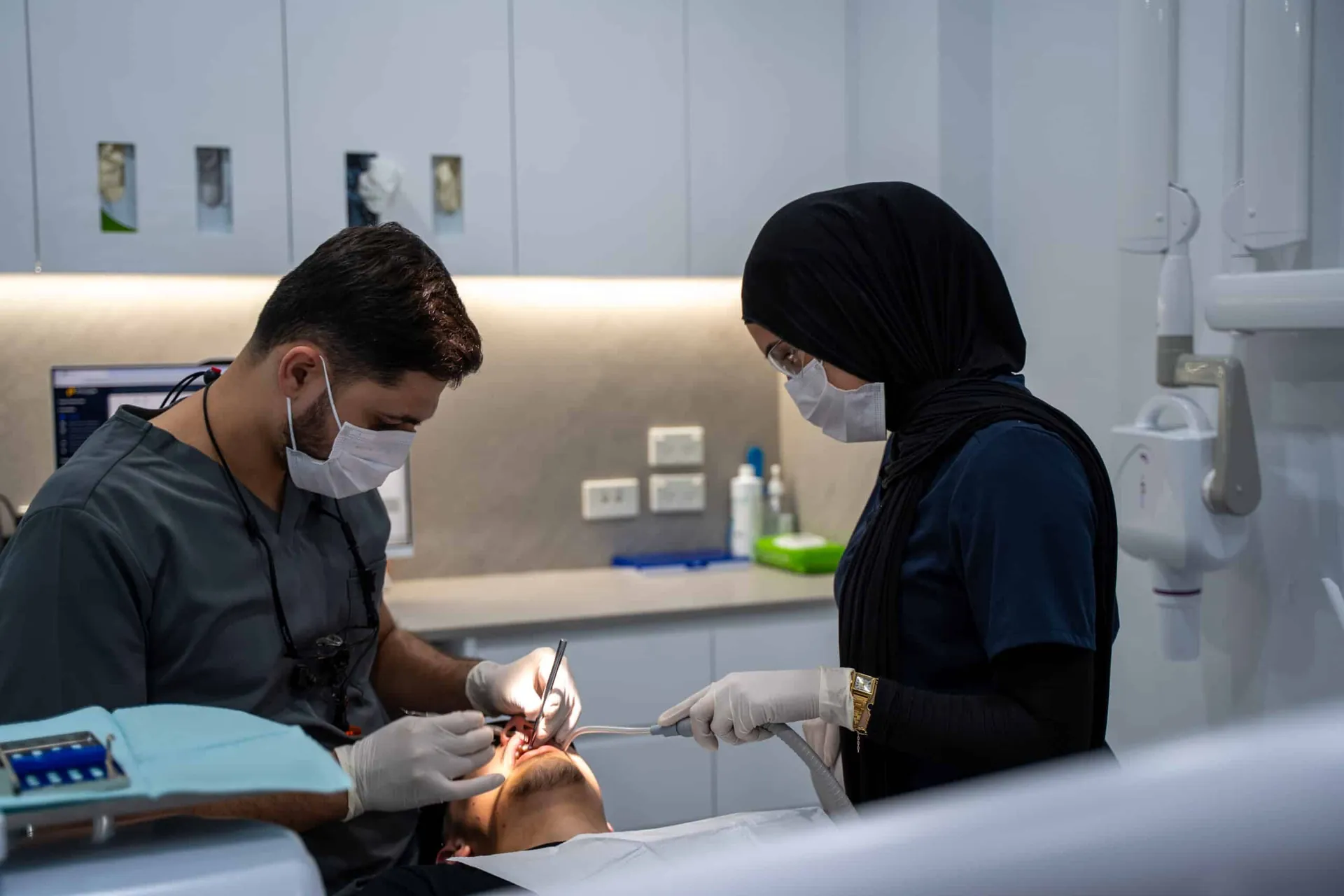
During a scale and clean, your dentist or oral health therapist will:
Remove plaque and tartar from all tooth surfaces using an ultrasonic scaler or hand instruments
Clean along and just below the visible gum line
Polish the teeth to remove surface stains and reduce future plaque adhesion
Apply fluoride treatment if recommended
The procedure is generally comfortable, typically takes between 30 and 60 minutes, and leaves your teeth feeling noticeably cleaner.
A scale and clean is a preventive treatment. It is designed to maintain healthy gums and catch potential issues early, before they progress into something more serious.
Get the Right Clean, Not Just Any Clean
Not every dental cleaning is the same, and choosing the right one matters for your gum health. Our Sydney team uses precise measurements to assess your gums and recommend whether a scale and clean is enough or if a deep clean is needed so you get the treatment your teeth actually require.
What Is a Deep Clean?
A deep clean, clinically known as scaling and root planing (SRP), is a more intensive periodontal treatment.
It is recommended that when gum disease is present or developing, often identified during a routine dental checkup and cleaning. Unlike a regular scale and clean, deep cleaning goes well below the gum line, cleaning the root surfaces inside the periodontal pockets that form between the tooth and gum tissue.
A deep clean involves two components:Scaling: Removal of plaque and tartar from below the gum line, inside the periodontal pockets.
Root Planing: Smoothing of the root surfaces to remove bacterial toxins and encourage the gum tissue to reattach to the tooth.
Because a deep clean accesses areas well below the gum line, it is typically performed under local anaesthetic to ensure your comfort. Treatment may be completed in one appointment or split across two visits, depending on the severity of the condition.
Scale and Clean vs Deep Clean: Quick Comparison
| Feature |
|---|
Scale and Clean |
Deep Clean |
| Purpose |
|---|
Preventive |
Treat gum disease |
| Area Cleaned |
|---|
Above and slightly below the gum line |
Deep below the gum line |
| Anaesthesia |
|---|
Not required |
Usually required |
| Duration |
|---|
30 to 60 minutes |
60 to 120 minutes |
| Frequency |
|---|
Every 6 months |
As needed and maintenance |
How Does Your Sydney Dentist Decide Which One You Need?
Your dentist will determine this through a clinical tool called periodontal probing, not a visual inspection alone.
During your examination, your dentist uses a small, calibrated probe to gently measure the depth of the pockets between your teeth and gums at multiple points around each tooth. These measurements are recorded in millimetres.
Here is what those measurements mean:
1 to 3mm: Healthy gum pocket. A routine scale and clean is sufficient.
4mm: Early warning. A thorough scale and clean with close monitoring may be recommended.
5mm or more: Periodontal pockets indicating active gum disease. A deep clean is typically recommended at this stage.
6mm or deeper: Moderate to advanced gum disease. Deep cleaning of teeth is clinically necessary, and ongoing periodontal maintenance will follow.
Your dentist will also assess bleeding on probing, bone levels on X-rays, signs of gum recession, and tartar accumulation below the gum line before making a clinical recommendation.
If your dentist recommends a deep clean, it is because the clinical evidence supports it.
Warning Signs You May Need a Deep Clean
Many patients with early gum disease experience few or no obvious symptoms. However, there are signs worth taking seriously:
Gums that bleed when you brush or floss
Gums that appear red, swollen, or feel tender
Persistent bad breath that doesn’t resolve with brushing
Gums that look like they are pulling away from your teeth
Teeth that feel loose or have shifted position
If it has been several years since your last professional clean
If you recognise any of these signs, a professional gum assessment at a Sydney dental clinic like Hayat Dental is strongly recommended. Early intervention makes a significant difference to long-term outcomes.
What Happens After Each Treatment?
After a Scale and Clean
Most patients experience no downtime after a scale and clean. Your teeth may feel slightly sensitive for a day or two, particularly if tartar build-up was significant.
Your dentist will typically recommend your next scale and clean in six months.
After a Deep Clean
Following scaling and root planing, it is normal to experience some gum tenderness and sensitivity for several days. Your gums may appear slightly swollen and bleed a little initially.
Your dentist may recommend:
A prescribed antibacterial mouth rinse
Over-the-counter pain relief if needed
A follow-up appointment within four to eight weeks to reassess pocket depths and monitor healing
With proper care, most patients see meaningful improvement in gum health following deep cleaning of teeth. Ongoing periodontal maintenance appointments every three to four months are typically recommended to prevent recurrence.
Does Health Fund Cover Scale and Clean or Deep Clean in Sydney?
Most Australian private health fund extras cover teeth cleaning in Sydney as a general preventive treatment, often twice per year, depending on your level of cover.
Deep clean treatments are generally covered under higher-level extras or major dental cover, as they are classified as periodontal treatments. Item numbers will vary, so it is worth contacting your health fund or bringing your membership card to your appointment.
Our team can provide you with the relevant item numbers so you can check your entitlements before proceeding with any treatment.
Conclusion
A scale and clean and a deep clean are not interchangeable treatments, and understanding the difference helps you make informed decisions about your oral health. A scale and clean is designed to maintain healthy teeth and gums, while a deep clean is recommended when there are clear signs of gum disease that require treatment below the gum line. Your dentist does not make this decision based on assumption, but it is guided by clinical measurements, gum condition, and overall oral health. Staying consistent with routine cleans and addressing early signs promptly can help you avoid more advanced treatment. If you are unsure which one you need, a proper dental assessment will give you a clear and accurate answer.
Book gum disease treatment in Sydney at Hayat Dental Broadway, or call (02) 9030 0247 .



Written by the Hayat Dental team
Dr Abhishek Aggarwal, Dr Joanne McGilp and Masi Hashimi care for patients at our Broadway clinic in Chippendale.
Meet the teamThis article is general information only and is not a substitute for a dental assessment. If you have pain or swelling, call the clinic.