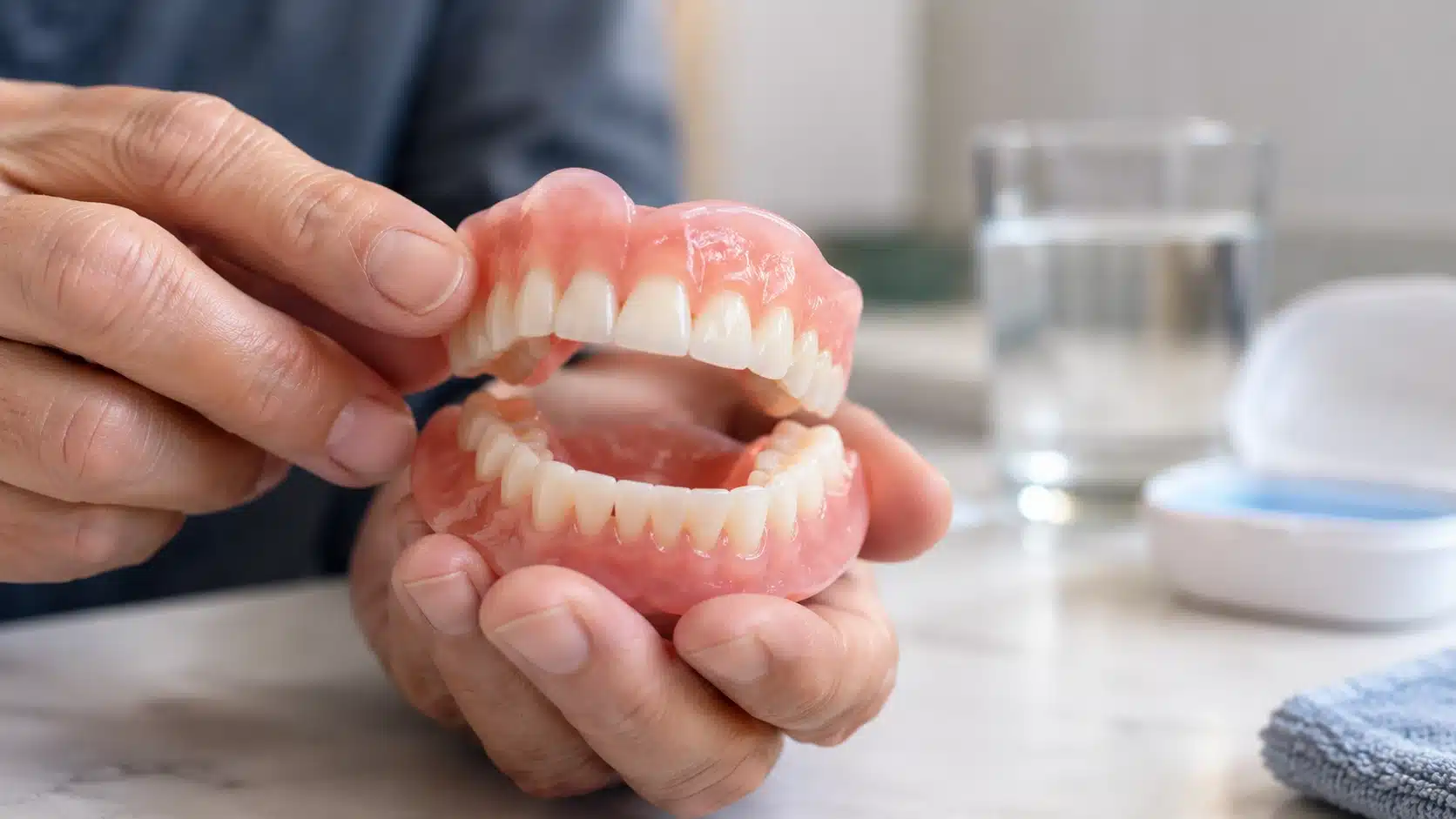
Dentures slipping when eating is one of the most common complaints from denture wearers, and it usually has a fixable cause. The right answer depends on what is making the denture move, and the options range from simple adjustments to implant-supported treatment.
Why lower dentures slip more than upper ones
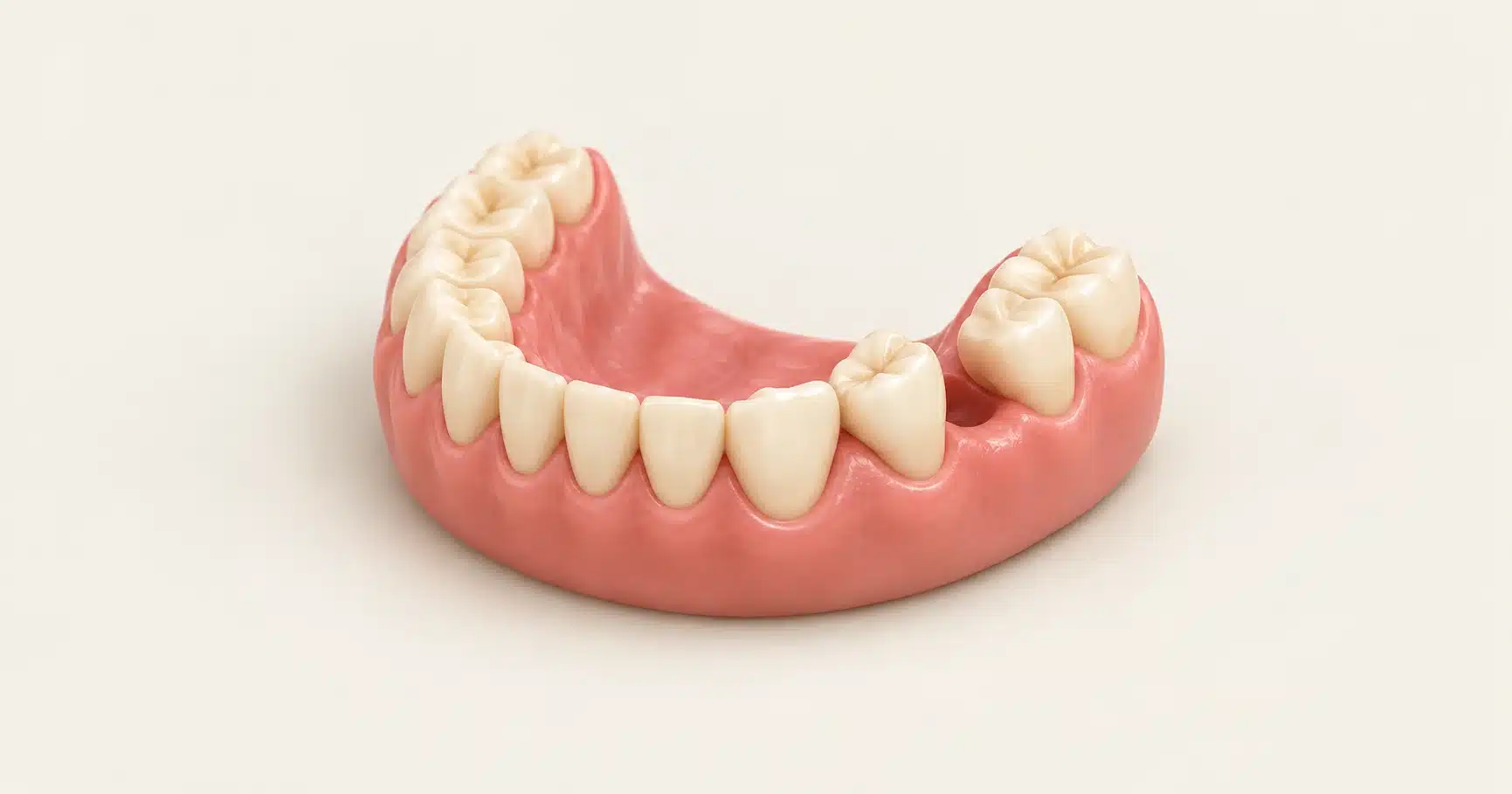
An upper denture covers the palate, which gives it a broad surface to hold against. A lower denture has no equivalent. It sits on a narrow ridge with the tongue on one side, the cheeks on the other, and far less surface area to work with.
This is why most complaints about slipping concern the lower denture, and why the two jaws are not treated the same way.
What is actually causing the movement
Several things cause a denture to loosen, and they call for different responses.
The ridge changes shape: Bone that no longer holds teeth gradually reduces in height and width, so a denture fitted years ago may no longer match the shape it sits on. Changes in the jaw ridge are a common reason a denture that once fitted well may become loose.
The denture itself wears: Teeth wear down, the base can warp slightly over years, and the bite between upper and lower changes as a result.
The bite is unbalanced: If the teeth do not meet evenly, the denture is tipped off its base every time you close.
Dry mouth reduces the thin film of saliva that helps a denture hold, which is relevant for many people on common medications.
Muscle and tongue habits adapt around a loose denture over time, sometimes in ways that make it less stable rather than more.
An assessment with a dentist in Sydney establishes which of these applies. That’s why it helps to have the cause checked before deciding on implants.
Start with the denture you have
Not every answer involves surgery, and the simpler options are often skipped over.
A reline refits the fitting surface to the ridge as it is now. Where the denture is otherwise sound, this can restore a considerable amount of stability.
Adjusting the bite so the teeth meet evenly can stop a denture that rocks or tips when you chew.
Where the denture is old, worn or was never well fitted, a properly made new denture is sometimes the honest answer, particularly if the original was made quickly after extractions while the ridge was still changing shape.
Denture adhesive may help improve retention when used correctly, but it should not replace assessment of an ill-fitting denture. Relying on increasing amounts is a sign the denture needs assessing.
Adding stability with implants
Where conventional dentures cannot provide adequate stability, an implant-retained overdenture may be an option, and in some cases a new denture is made to suit the implants.
For patients missing all their lower teeth, an implant-retained overdenture supported by two implants is a well-established option. The McGill and York consensus statements recognised its benefits compared with conventional complete lower dentures, particularly for patient satisfaction and quality of life. However, individual suitability depends on jawbone health, medical history and treatment needs.
The denture still comes out for cleaning. It is still a denture. What changes is that it is held in place rather than resting on the ridge.
The upper jaw is different. Bone quality is generally softer and more implants are usually needed, so an upper overdenture is a different proposition from a lower one.
Fixed options
Where a removable prosthesis is not wanted at all, a full arch can be supported on implants and fixed in place, so it is not taken out by the wearer. Full-arch approaches including All-on-4 dental implants are designed around using available bone efficiently, often by angling the back implants.
These are substantial treatments with staged provisional and final prostheses, specific maintenance requirements and a cleaning routine that has to be kept up. They are not automatically the right answer because they are the largest one, and suitability depends on bone, gum health, medical history and what you want to take on.
What no option can promise
It’s worth being clear about what any option can and can’t do.
Although implant-supported options can improve stability and function, they do not completely replicate natural teeth. Implant-retained and fixed options usually improve stability considerably compared with a conventional denture, but no option is maintenance-free and none is guaranteed to last indefinitely. Attachments wear and need replacing. Fixed prostheses need professional cleaning and review. Implants can develop problems around them, particularly where gum health or smoking are factors.
A treatment plan that comes with none of these caveats is not describing the whole picture.
What the assessment involves
- An examination of the existing denture, including its fit, bite and condition
- An assessment of the ridge and the soft tissue underneath
- Radiographs, and a 3D scan where implants are being considered
- A review of your medical history, medications and dry mouth
- A discussion of what each option would involve, including maintenance
- Where implants are being considered, the number of stages and the time between them
Frequently Asked Questions
Can a slipping denture just be relined?
Sometimes, and it is worth asking first. A reline refits the denture to the ridge as it is now, which can help considerably where the denture is otherwise sound.
How many implants do I need to hold a lower denture?
For a patient missing all lower teeth, a well-established approach uses two implants at the front. The number depends on the jaw, the bone available and whether the prosthesis is removable or fixed.
Is a fixed option better than an implant-retained denture?
Not automatically. They suit different situations, and a removable overdenture held by implants is a well-evidenced option with high patient satisfaction in studies.
I have worn dentures for decades. Is there enough bone left?
Possibly. A clinical examination and appropriate imaging, which may include a 3D scan, help determine whether sufficient bone is available. Where bone is limited, there are approaches that work with what is there, and it does not always rule implants out.
Will I be without teeth at any stage?
That depends on the pathway and should be set out clearly before you agree to anything. Ask specifically what you will be wearing at each stage.
Concerned about loose dentures?
If your dentures are moving when you eat or becoming uncomfortable, a dental examination can help identify the cause. At Hayat Dental in Broadway, Sydney, our team can assess your oral health and explain suitable tooth replacement options, including dental implants and full-arch treatments where appropriate. Book a consultation to discuss your concerns.


Written by the Hayat Dental team
Dr Abhishek Aggarwal, Dr Joanne McGilp and Masi Hashimi care for patients at our Broadway clinic in Chippendale.
Meet the teamThis article is general information only and is not a substitute for a dental assessment. If you have pain or swelling, call the clinic.