Teeth shifting after a missing tooth is usually gradual. Nearby teeth may shift, the opposing tooth can move towards the space, and the way your teeth come together may change. Understanding what has actually moved and how much can help your dentist decide whether the area simply needs monitoring or whether further treatment should be considered.
What actually moves after a back tooth is lost
Three things tend to happen, at different rates in different people.
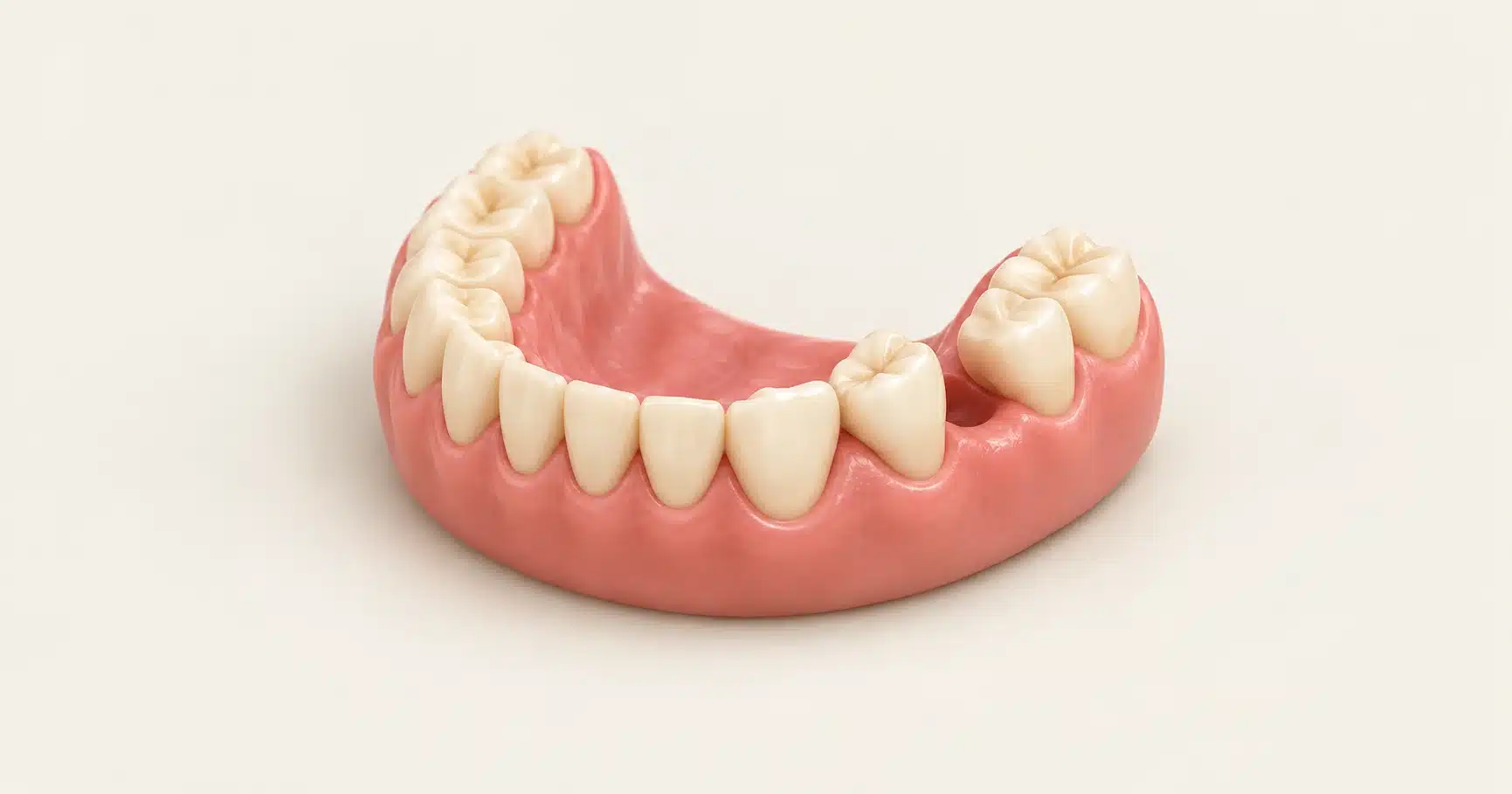
The teeth either side of the gap can tilt towards it. This is usually tipping rather than bodily movement, which matters because a tilted tooth can be harder to clean on the leaning side and may be more difficult to maintain.
The tooth in the opposite jaw, the one that used to bite against the missing tooth, can gradually move towards the space. The amount varies considerably between people and can range from very little movement to clinically noticeable over-eruption.
The bone that supported the missing tooth also remodels gradually. These bone changes after a tooth is lost can reduce the ridge’s height and width over time.
None of this happens overnight, and the rate varies considerably between people and between sites. Some gaps change very little over years. Others may show noticeable changes sooner.
Why a back tooth matters more than the gap suggests
Back teeth do much of the chewing work. When one is missing, the distribution of chewing forces can change, placing different demands on the remaining teeth.
Over time, your dentist may notice changes in wear patterns or areas where certain teeth appear to be taking more bite pressure than before. Some people may also notice that certain teeth meet differently when they bite.
This is why a gap nobody can see is still worth assessing. The important issue is not only how the space looks, but also whether the surrounding teeth and bite have changed.
What your dentist is actually looking for
Assessment may involve both the current position of the teeth and, where appropriate, comparison over time.
Your dentist will look at how much the neighbouring teeth have tilted and whether there are changes in the gum around them. They will also assess whether the opposing tooth has moved towards the gap and whether this is affecting how the teeth come together.
The gum and bone condition around the teeth bordering the space may also be checked, along with the bite as a whole and any changes in tooth wear.
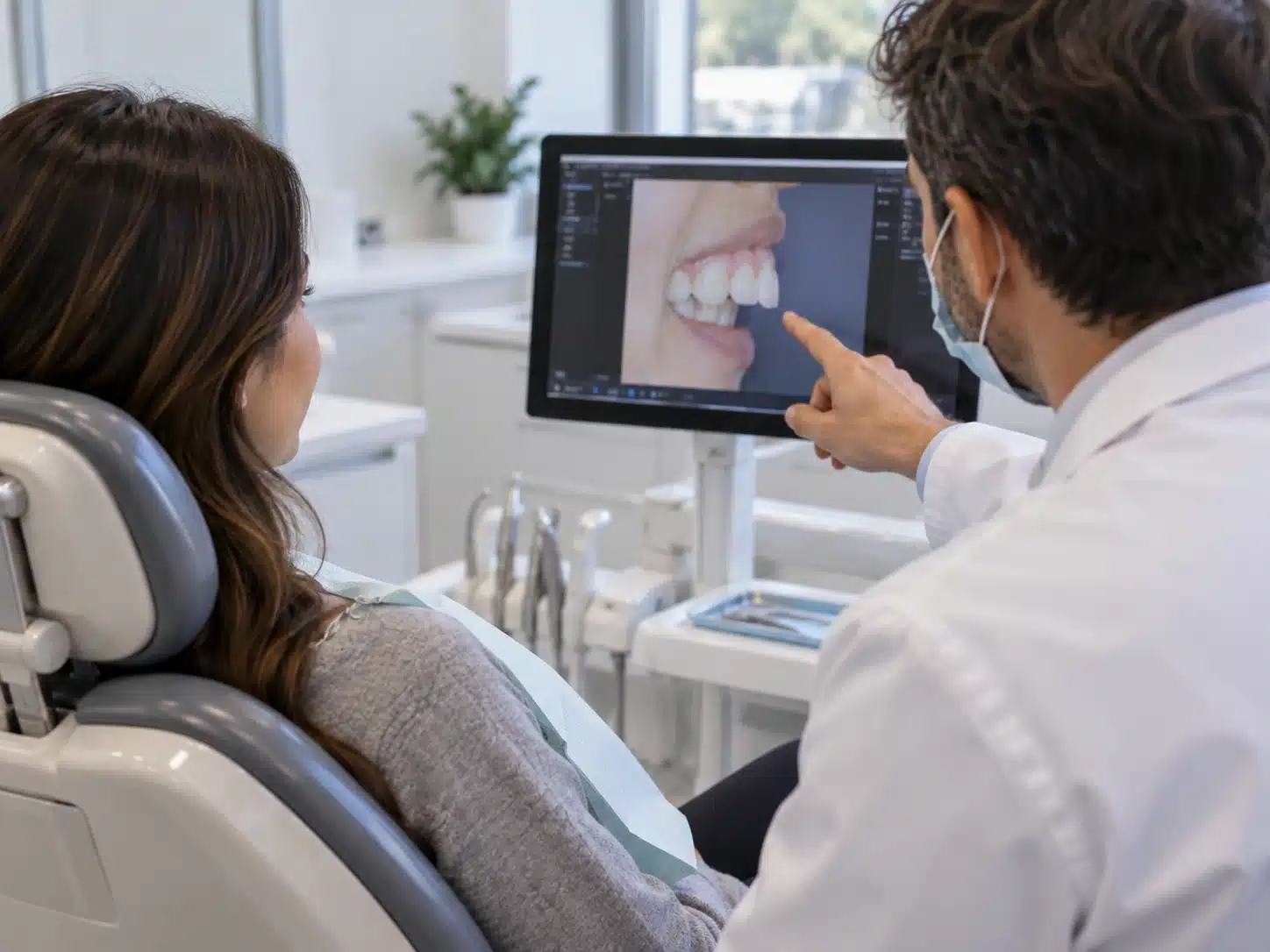
Photographs, digital scans or study models can provide a useful reference point. If the area is being monitored, these records can make it easier to identify whether further movement has occurred over time.
Can a missing back tooth change your bite?
It can. A missing tooth removes one of the contact points that previously helped maintain the position and relationship of the surrounding teeth.
If a neighbouring tooth begins to tilt into the space or the opposing tooth moves down or up towards the gap, the way the upper and lower teeth meet can gradually change.
For some people, these changes remain minor. For others, they may become noticeable when chewing or biting. This is one reason dentists assess the whole bite rather than looking only at the empty space.
Can teeth keep shifting years after an extraction?
Movement does not follow the same timeline for everyone.
Some people may experience most of the change relatively early after losing a tooth, while others may notice gradual changes over a longer period. The amount of available space, the position of the surrounding teeth and the way the upper and lower teeth meet can all influence what happens.
Even if a tooth was removed several years ago, it can still be useful for your dentist in Sydney to assess the current position of the surrounding teeth before deciding whether anything needs to be done.
When monitoring can be reasonable
Not every missing back tooth needs to be replaced immediately.
For example, the considerations around a missing last molar can be different from those around a gap between two remaining teeth because there may be no tooth behind the space that can tip into it.
Where movement is minimal or appears stable, or where there are other dental priorities, your dentist may recommend monitoring the area rather than treating it straight away.
Monitoring is most useful when there is a clear starting point. Clinical examinations, photographs or digital records can help your dentist compare the area over time and identify meaningful changes.
Does a missing back tooth always need to be replaced?
Not necessarily.
Whether a missing back tooth replacement is recommended depends on several factors, including which tooth is missing, the health of the neighbouring teeth, your bite, available bone and whether the gap is causing functional problems.
For some people, monitoring may be appropriate. For others, replacing the tooth may help restore function and maintain the space.
If replacement is being considered, options may include dental implants, a dental bridge or a removable denture. Choosing between them depends on the condition of the surrounding teeth, the available bone and the location of the missing tooth.
Frequently Asked Questions
How quickly do teeth shift after a back tooth is removed?
It varies widely. Some people show very little change over years, while others may show noticeable movement sooner. The amount and speed of movement depend on the individual situation.
Will replacing the tooth stop the shifting?
Replacing a tooth restores some of the contacts that were lost and may help limit further movement related to the gap. It does not automatically reverse movement that has already occurred.
My gap is years old. Is it too late to replace the tooth?
Not necessarily. A gap that has been present for years can still be assessed for replacement. However, existing drifting, over-eruption or bone changes after a tooth is lost may affect what treatment is possible.
I have no pain and the gap looks fine. Could my teeth still have moved?
Yes. Teeth shifting after extraction and over-eruption can occur without causing pain. Changes may instead be noticed in the bite, spacing, food trapping or the position of the surrounding teeth.
Can losing a back tooth affect chewing?
It can. Back teeth play an important role in chewing, so losing one may change how chewing forces are distributed. The effect varies depending on which tooth is missing and the condition of the remaining teeth.



Written by the Hayat Dental team
Dr Abhishek Aggarwal, Dr Joanne McGilp and Masi Hashimi care for patients at our Broadway clinic in Chippendale.
Meet the teamThis article is general information only and is not a substitute for a dental assessment. If you have pain or swelling, call the clinic.