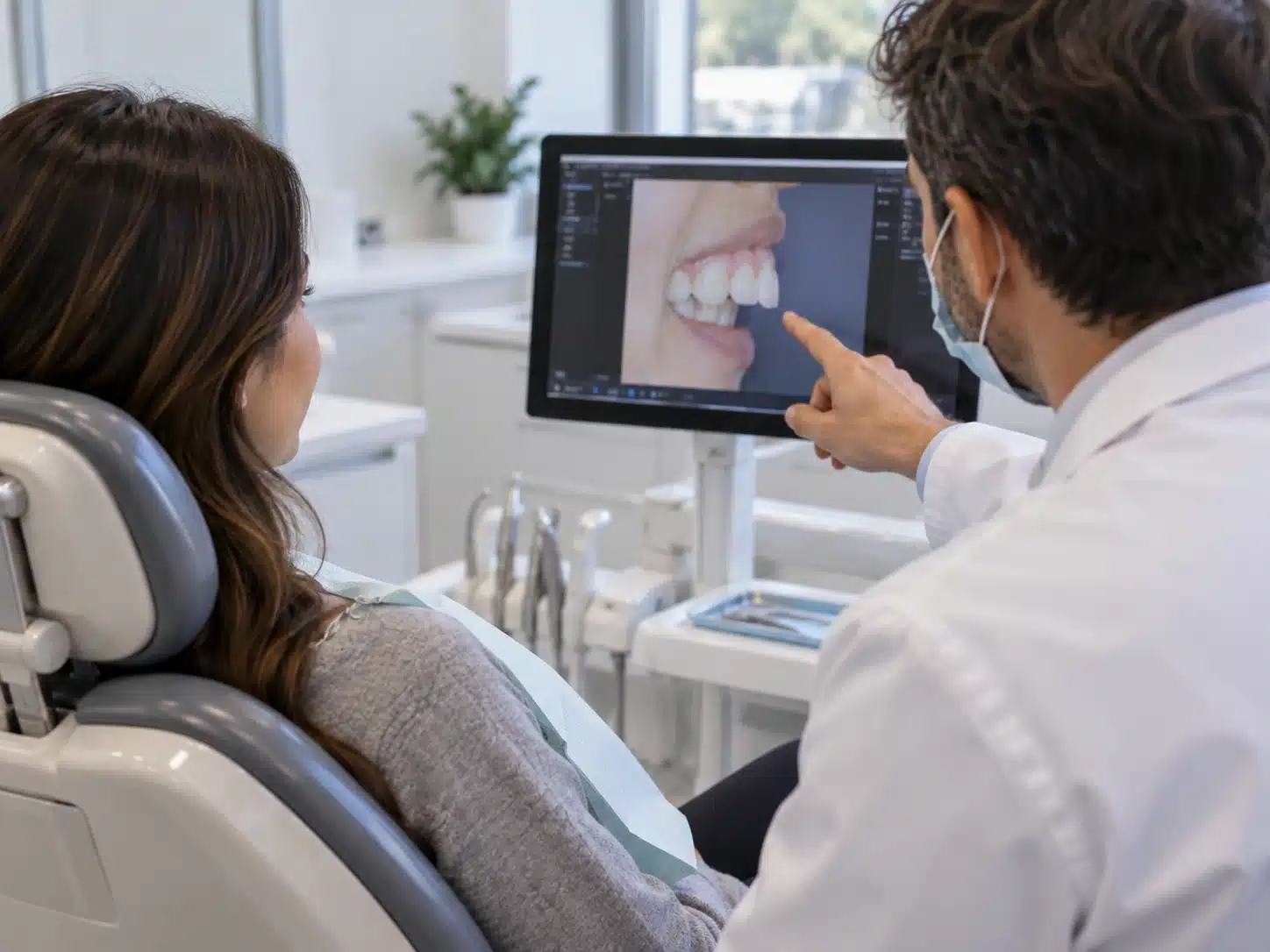
What sticking out actually means
Dentists call it overjet. A small amount of horizontal overlap between the upper and lower front teeth is normal. When the upper teeth sit noticeably further forward, your dentist or orthodontist may describe this as increased overjet.
Overjet is different from overbite, which is the vertical overlap. The two terms get used interchangeably, but they are different problems and are not treated the same way. You can have one without the other.
Why adult front teeth stick out
How the teeth are angled
Sometimes the jaws sit in a reasonable relationship, and the upper front teeth are simply tilted too far forward. Excessive forward inclination of the upper front teeth, backward inclination of the lower front teeth, or both, is a common dental cause of increased overjet. This is generally the most straightforward situation to address.
How the jaws sit
In other cases, the cause is skeletal. An increased overjet is often associated with a lower jaw that is small in relation to the upper jaw, and people with this pattern usually have a convex facial profile with a recessed chin. Moving teeth cannot change where the jaws sit. That single point explains most of the difference between adult and childhood treatment.
Changes that happen later in life
Protrusion can also appear or worsen in adulthood. Losing back teeth allows the remaining teeth to drift into the empty spaces, which can collapse the bite and cause the front teeth to flare outward. A long-standing tongue thrusting habit can act like a slow-motion orthodontic wire, pushing the front teeth further out over decades. Gum disease that reduces bone support makes teeth easier to shift out of position.
Why it is worth reviewing beyond appearance
Protruding front teeth are the first point of impact in a fall or a sporting injury, and they are no longer protected by the lips or supported by the lower teeth. In some cases, the lower front teeth over-erupt and bite into the gum behind the upper front teeth, causing damage to that tissue. A severe increase in overjet can also affect functions such as speech and chewing.
None of this applies to every case. It is why the problem is assessed as a bite issue rather than a cosmetic one.
What adults can actually do about it
Orthodontics on its own
Where the cause is dental, moving the teeth can be enough. The upper front teeth are tipped back into a better position and the bite is levelled.
Orthodontics with space created
Retracting front teeth needs room. That room comes from interproximal reduction, from moving the back teeth backwards, or from extracting premolars. In some cases, removing premolars may provide the space needed for significant retraction, but this is decided individually after assessing the teeth, bite, facial profile and available space.
Orthodontics with anchorage support
Temporary anchorage devices are small screws placed in the bone that give the appliance something fixed to pull against, so the back teeth do not drift forward while the front teeth come back. They are used to manage posterior anchorage when the upper molars are being moved backwards.
Orthodontics with jaw surgery
Where the discrepancy is skeletal and significant, orthodontics alone cannot correct it. Combined orthodontic and surgical treatment addresses the position of the jaw itself. This is a specialist referral and it is the right answer for a minority of adult cases, not most.
What cosmetic treatment cannot do
Veneers and crowns change the shape and colour of teeth. They do not move them. Placed over protruding front teeth, they can make the prominence more obvious rather than less. Where appearance is the main concern, alignment generally comes first.
Where clear aligners fit
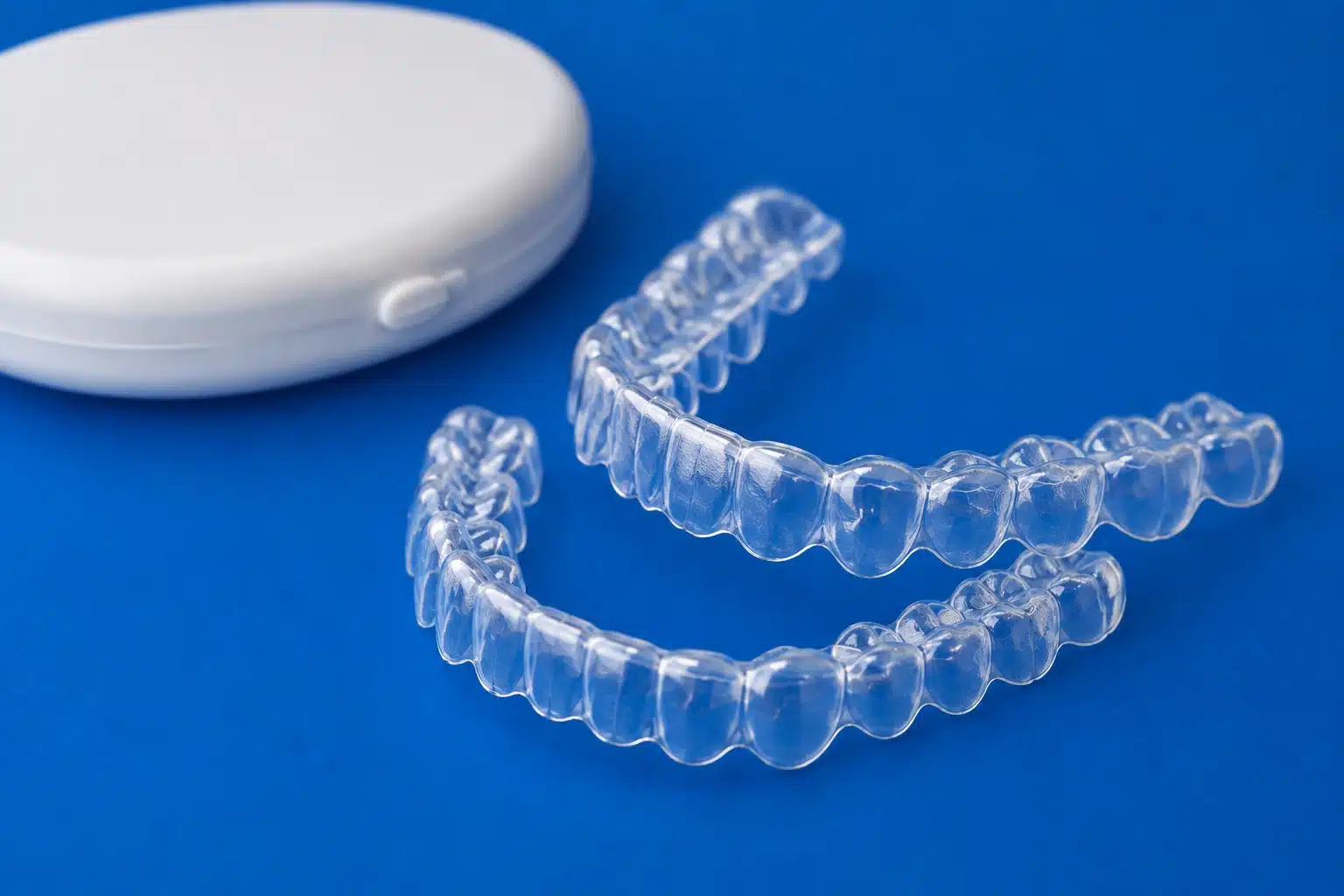
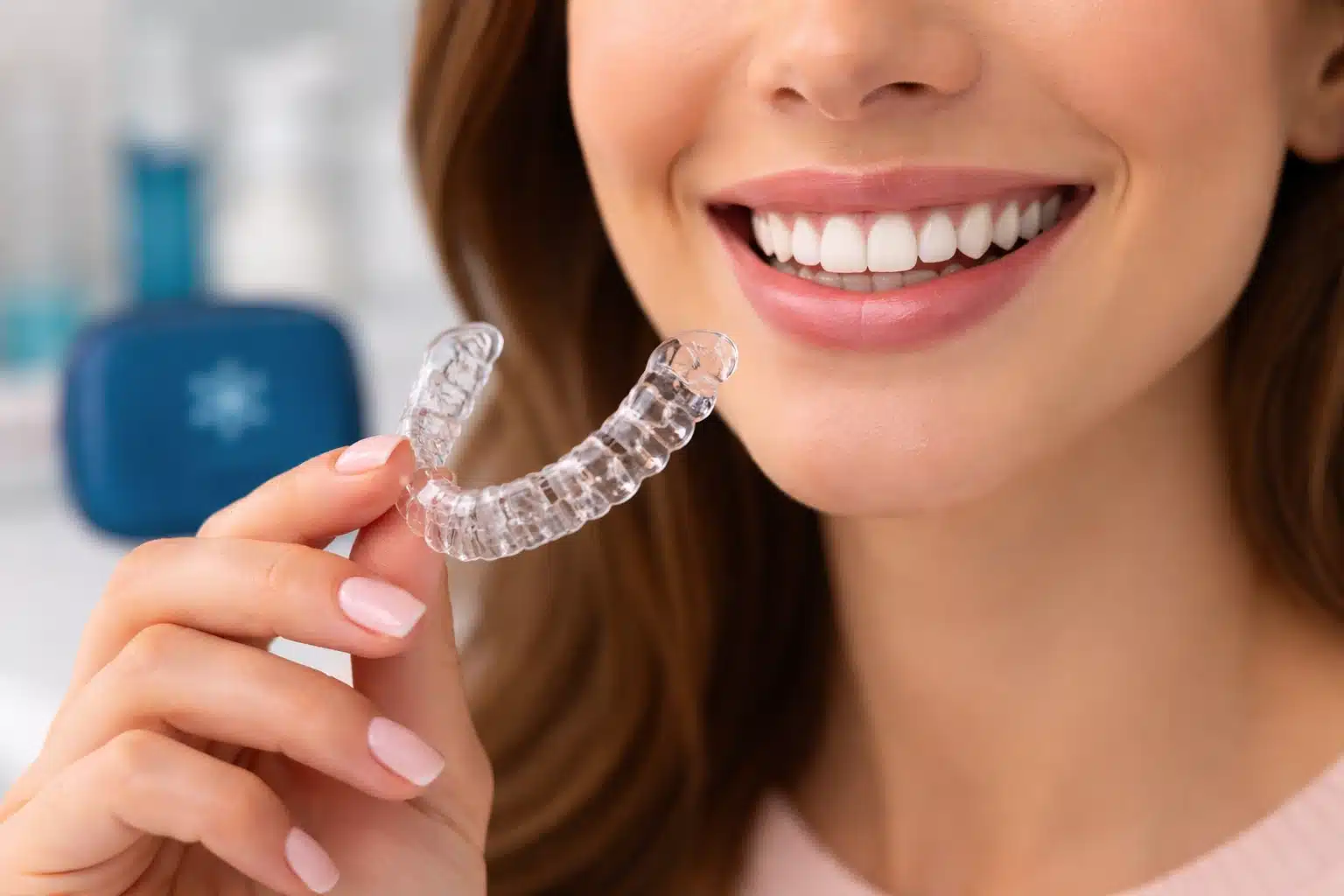
Invisalign treatment and other clear aligner systems are a reasonable option when the cause is dental, and the case is mild to moderate. Research suggests that clear aligners can be effective for alignment, but correcting more complex front-to-back bite relationships may require additional techniques such as elastics, attachments, interproximal reduction or skeletal anchorage.
In practice, this means those additions are often part of the plan rather than optional extras. It also means an aligner plan that promises significant jaw-relationship change without them is worth asking about. If you are weighing up appliances, our guide on Invisalign or braces for adults sets out what decides the choice.
How the right option gets worked out
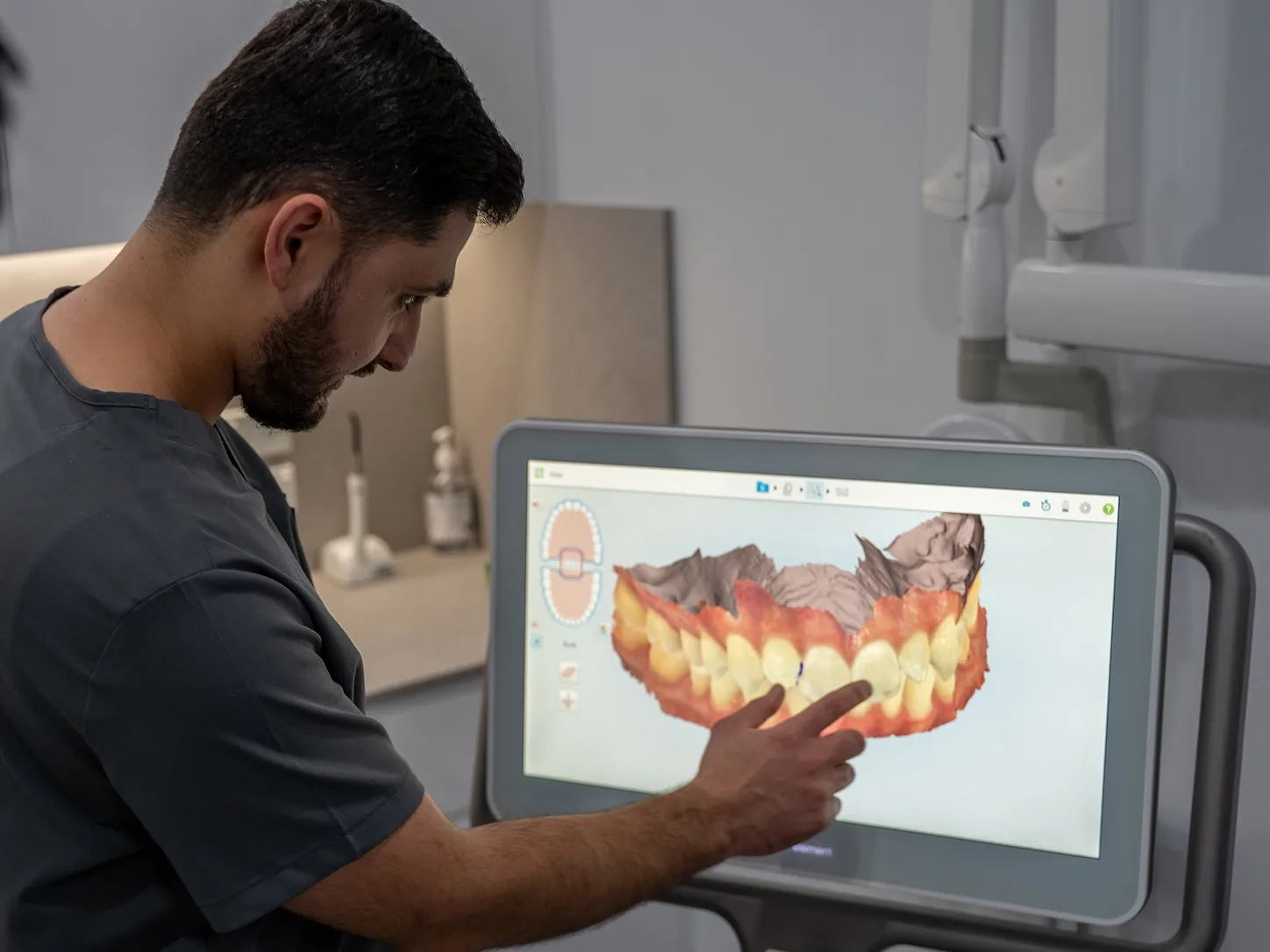
The assessment is what separates a dental cause from a skeletal one. Alongside photographs and a digital scan, that usually means a lateral cephalometric radiograph showing the relationship between the jaws and the angle of the front teeth. It is the difference between a straightforward orthodontic plan and a specialist referral, and it cannot be judged by looking at a smile.
When to get it checked
If your front teeth have always projected forward, or you have noticed them moving further forward over time, an assessment can help identify whether the cause is tooth position, your bite, missing teeth or changes in gum and bone support. Once the cause is clear, your dentist in Sydney can explain which treatment options are realistic for you.
Frequently Asked Questions
Am I too old to have this corrected?
No. Teeth can be moved at any age provided the gums and bone are healthy. What changes is that jaw growth can no longer be used, so the approach relies on tooth movement, space creation or surgery.
Can clear aligners fix teeth that stick out?
In dental cases, often yes. In skeletal cases they can improve the appearance but cannot change the jaw relationship. The assessment decides which you have.
Will I need teeth taken out?
Not always. Extraction is one way of creating space, and it becomes more likely as the amount of retraction required increases.
Do I need jaw surgery?
Most adults do not. It is reserved for significant skeletal discrepancies where orthodontics alone cannot achieve a stable, functional result.
My teeth have started sticking out more recently. Why?
Late changes usually relate to missing back teeth, a collapsing bite, or reduced bone support from gum disease. That is worth investigating rather than treating as ageing.

Written by the Hayat Dental team
Dr Abhishek Aggarwal, Dr Joanne McGilp and Masi Hashimi care for patients at our Broadway clinic in Chippendale.
Meet the teamThis article is general information only and is not a substitute for a dental assessment. If you have pain or swelling, call the clinic.