Start with the movement, not the appliance
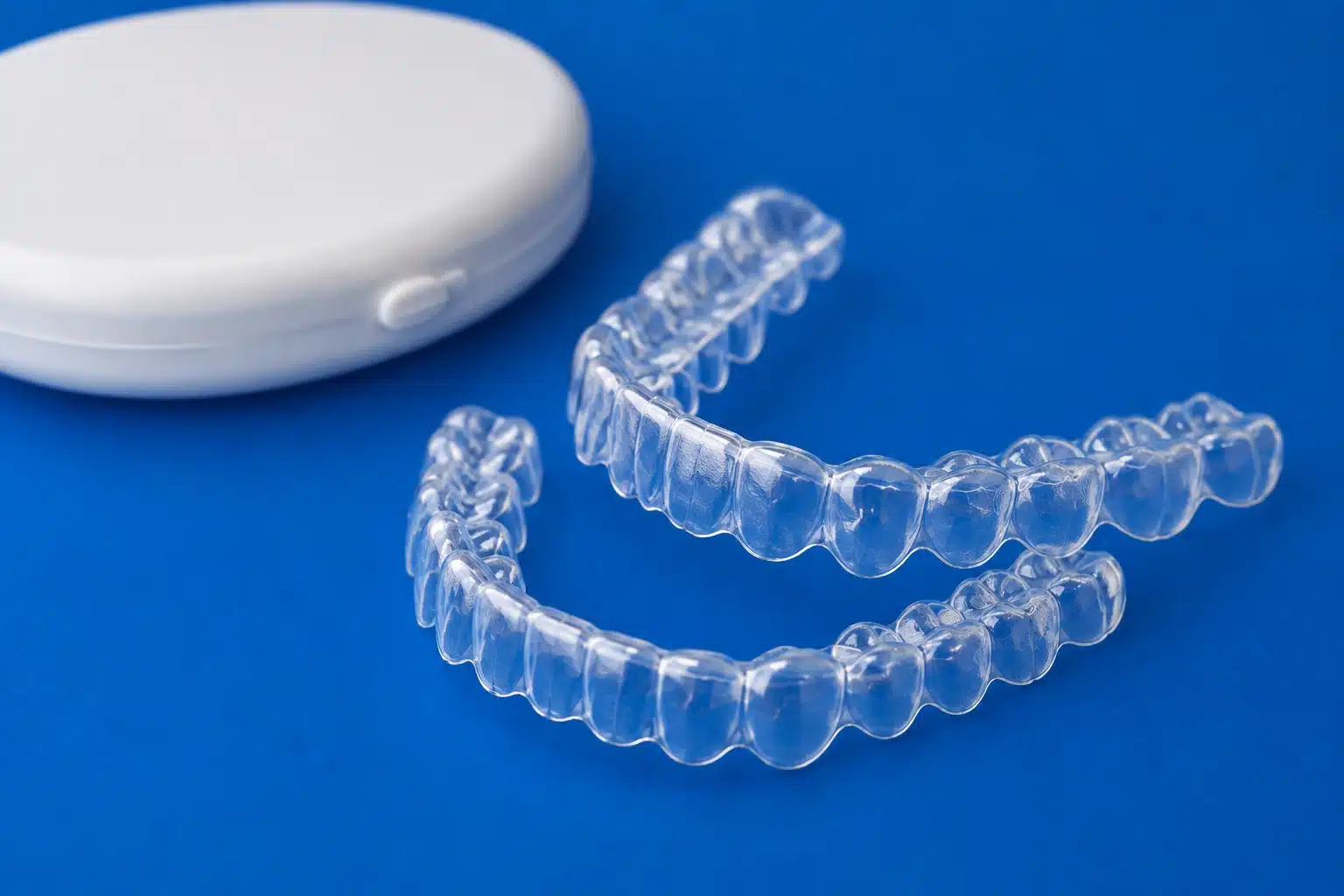
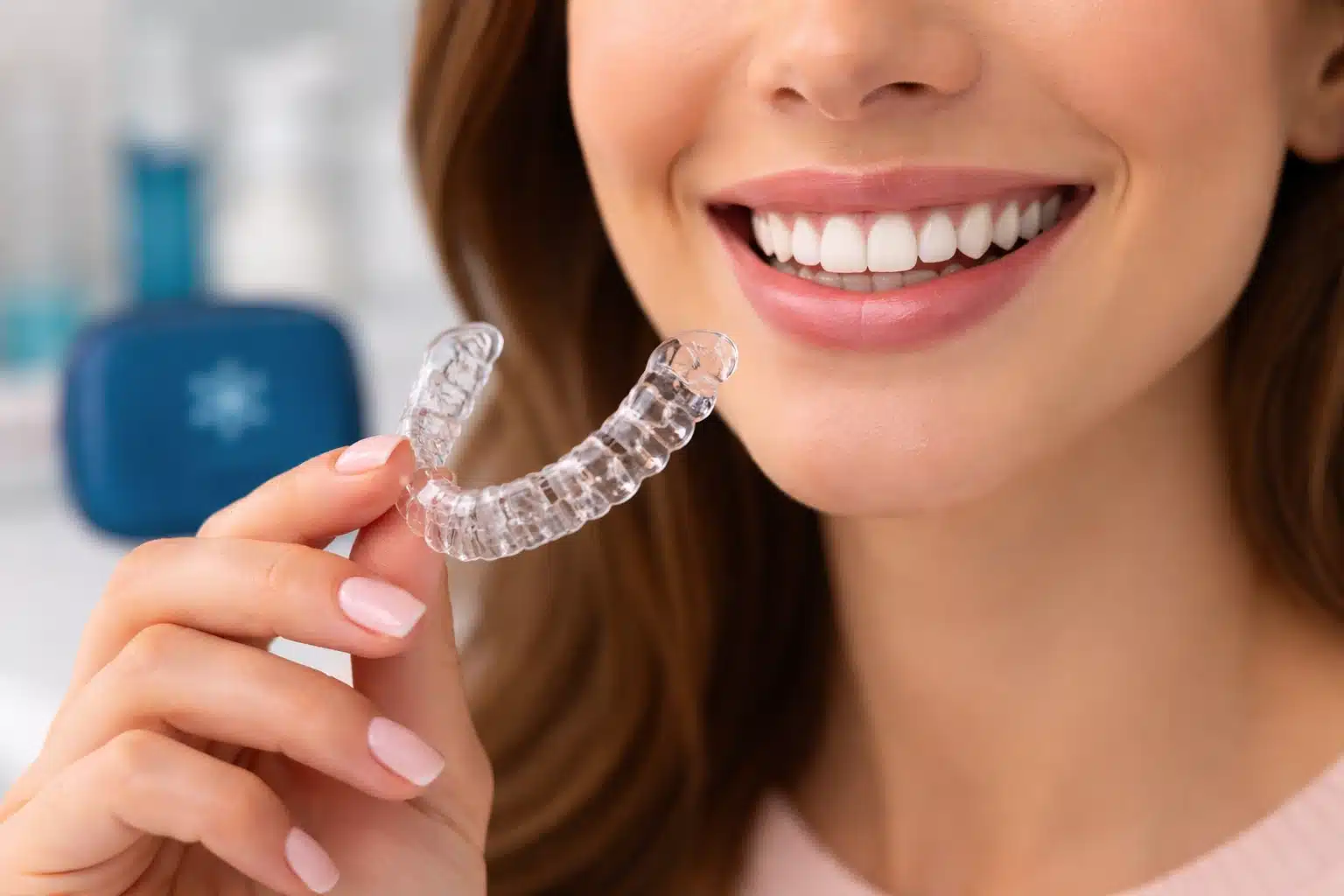
Both options move teeth, but not equally well in every direction. Braces use brackets bonded to each tooth and a wire applying continuous force, including twisting force through the root. Aligners use a sequence of trays that press on the crown, with small bonded attachments added to grip particular teeth and create leverage a smooth tray cannot generate alone.
That mechanical difference is where the decision sits, and the research is consistent about it. A 2025 systematic review comparing the two in adults found fixed appliances offer better control of rotation and of torque, which is root-level movement, while aligners perform well for intruding front teeth. A separate 2025 review of rotational accuracy found reported accuracy averaged around 65 per cent, ranging from 36 to 85 per cent, with incisors and molars more predictable and upper canines and premolars the least reliable.
In plain terms: if your case is largely about tipping crowded front teeth back into line, aligners handle that well. If it depends on derotating a canine or changing the angle of a root, braces have the advantage. Neither makes one appliance better overall.
The second question is whether you would actually wear them
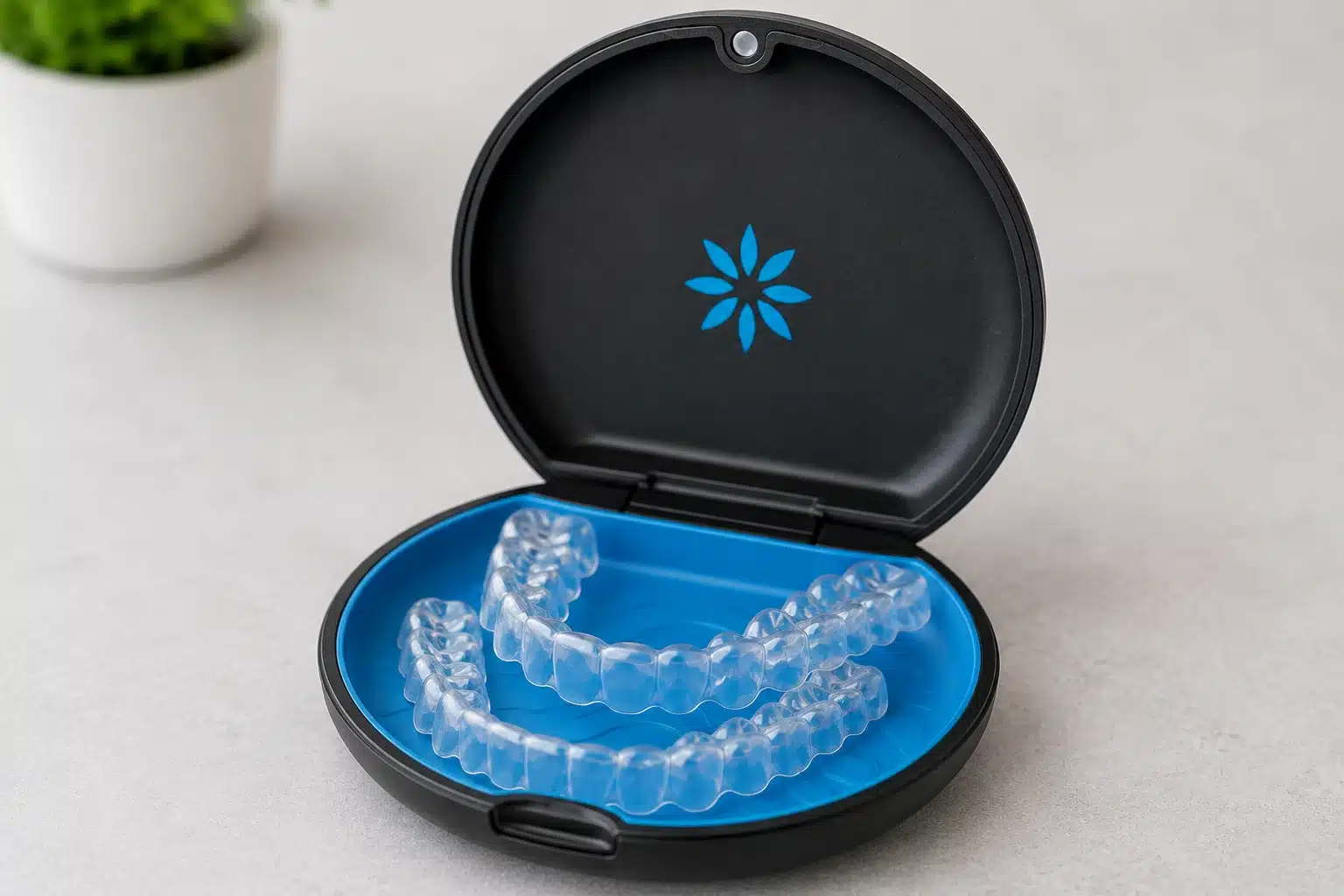
Aligners only work while they are in your mouth, which sounds obvious until you look at the compliance figures. A large retrospective cohort cited in a 2025 review of Invisalign predictability found only around a third of aligner patients achieved the full 22 hours a day, and roughly a quarter were poorly compliant.
That is not a character judgement; it is a planning input. If your week involves frequent client meals or shift work, fixed braces remove the variable entirely, because they work whether you remember them or not. Some adults choose braces for exactly that reason.
The third question is your gums and your existing dental work
Adults differ from teenage orthodontic patients in two ways. Gum disease becomes more common with age, and adults are far more likely to have crowns, veneers, implants and older fillings.
Reviews of periodontal outcomes suggest aligners may hold an advantage on the first point, because they come out for brushing and flossing, so plaque control during treatment is easier than cleaning around brackets and wires. For someone with a history of gum disease, that is a clinical consideration, not a convenience.
Existing dental work cuts the other way. Attachments bond reliably to enamel but less predictably to porcelain, and implants do not move at all, so both appliances must be planned around them. Either way, treat active decay or untreated gum disease before treatment begins.
Patient case
Adult crowding treated with clear aligners
Patient situation: An adult patient attended the practice with long-standing crowding across the upper and lower front teeth. Several teeth overlapped, the arch was narrow, and cleaning between the crowded teeth was difficult. The patient reported bleeding when brushing in that area. Alignment and gum health were both relevant from the first appointment, rather than appearance alone.
What we did: Our dentist, Dr Abhishek Aggarwal , took records at the assessment, including photographs, a digital scan and radiographs, and prepared a digital treatment plan. Because the crowding was concentrated in the front teeth, and because cleaning access was already a concern, he considered clear aligners appropriate for this case. He treated the patient over approximately twelve months across six to seven appointments, reviewing oral hygiene at each visit.
Result: The crowding was resolved and the front teeth aligned. Cleaning between the teeth became easier during treatment rather than only at the end of it, and bleeding on brushing had reduced by completion. Retainers were fitted at the finish of treatment.
Individual results vary. This describes one patient’s treatment and is not an expected outcome. General information only, and not a substitute for a clinical assessment.
Where each tends to fit
Clear aligners are often the stronger fit when
The crowding or spacing is mild to moderate and mostly in the front teeth
Plaque control is a priority, particularly with a history of gum disease
You are confident about 20 to 22 hours of wear a day
Visibility at work or socially is a genuine barrier to starting treatment
Fixed braces are often the stronger fit when
The case needs significant rotation, root movement or bite correction
Consistent wear of a removable appliance would be difficult
Several teeth need moving in different directions at once
What the decision is not about
Three things get more attention than they deserve. Age is one: there is no upper limit on orthodontic treatment provided the gums and bone are healthy. Discomfort is another, since both appliances cause pressure and tenderness after each tray change or wire adjustment. The third is speed, which is driven far more by the complexity of the case than by the appliance.
How the decision actually gets made
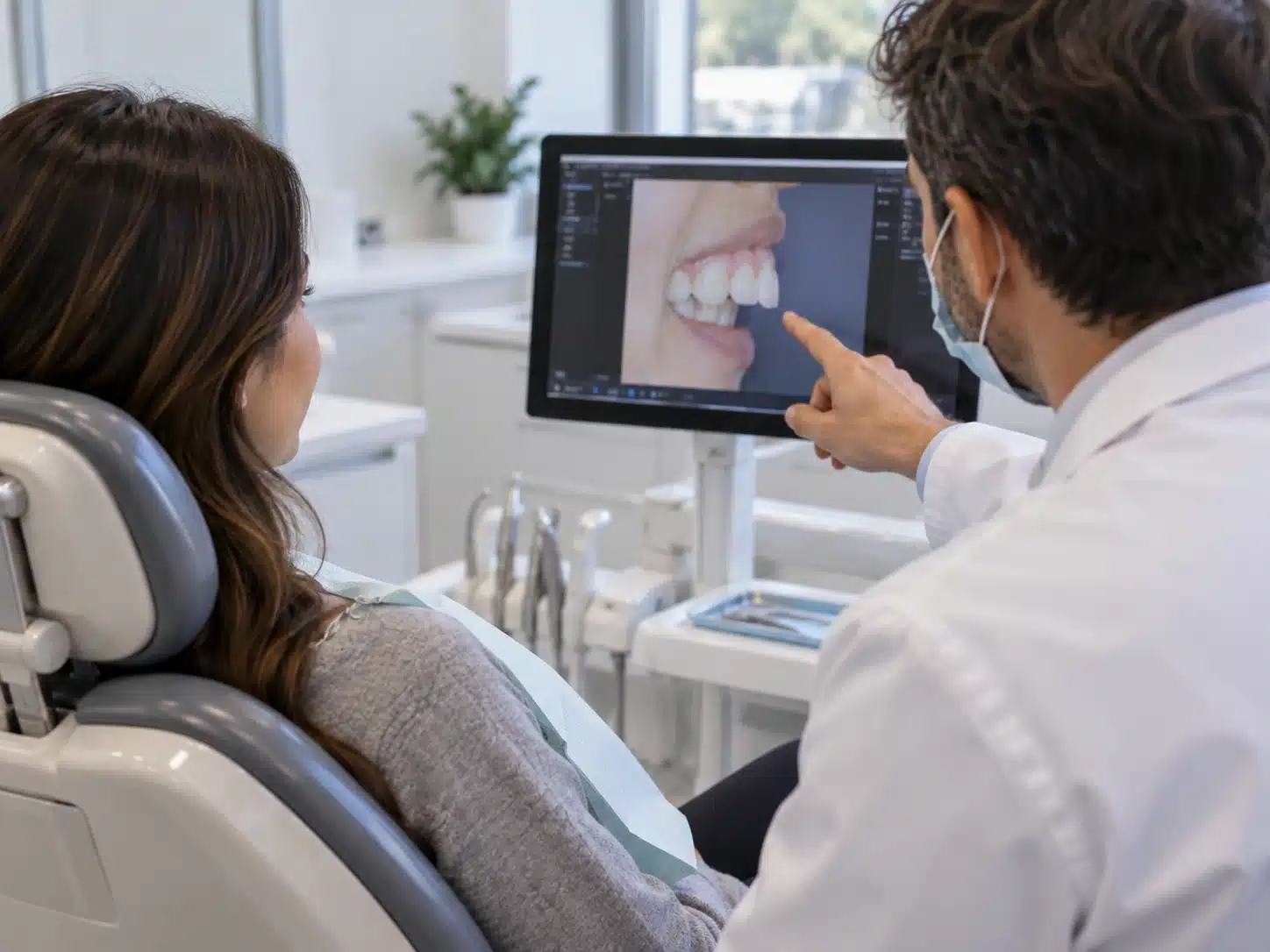
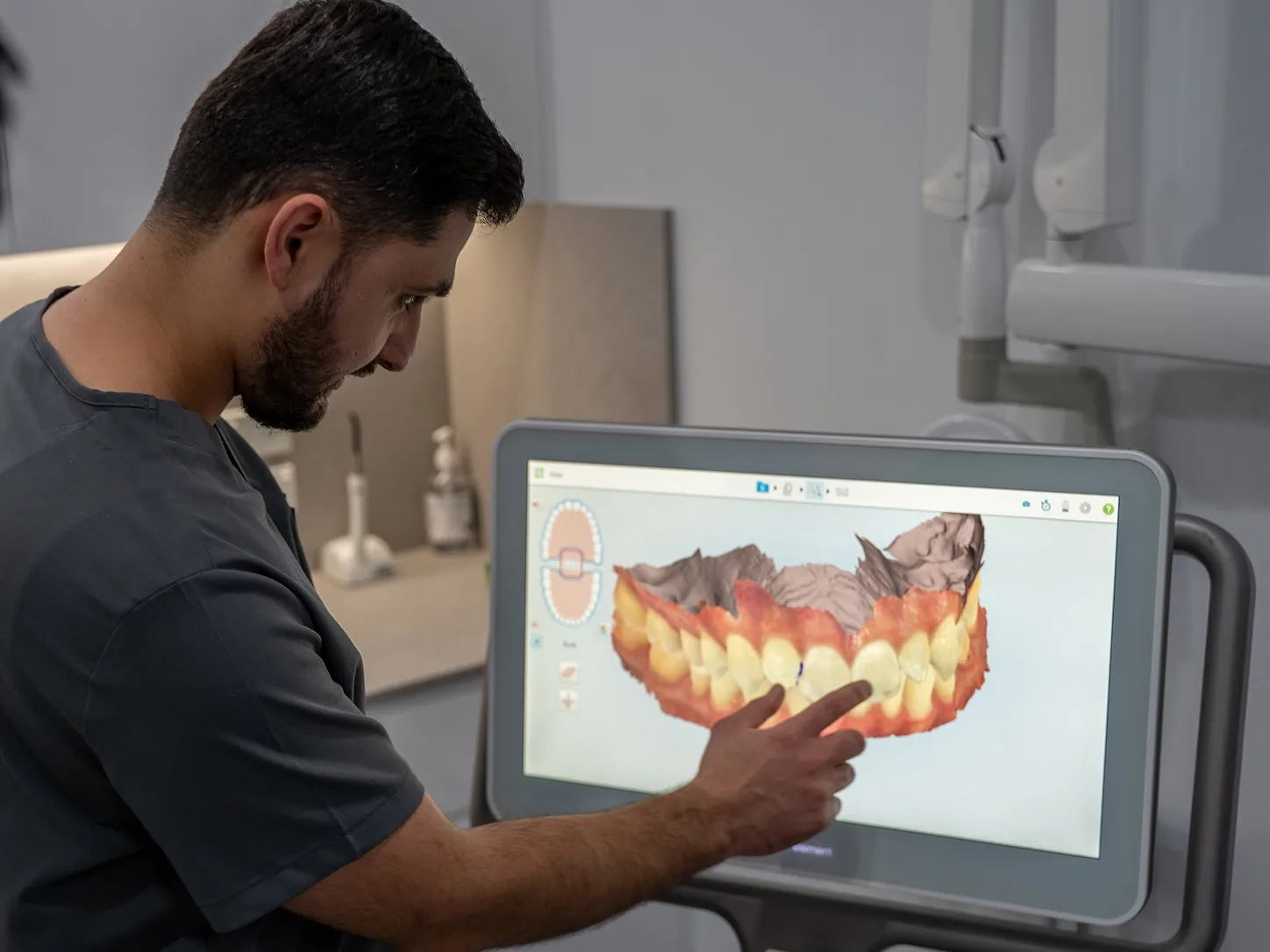
The assessment settles it. Photographs, a digital scan and radiographs show what is happening below the gumline, and a digital plan sets out which movements the case needs. Once those are on the table, the appliance question usually answers itself.
Hayat Dental is a dentist in Sydney based on Broadway in Chippendale, and we talk through both routes rather than steering you toward one. If Invisalign treatment turns out to be the better fit, the plan is built around the movements your case needs. Sometimes the answer is a combination: a short phase of fixed appliances to handle a difficult rotation, then aligners for the rest. Individual results vary, and suitability can only be confirmed after an examination.
What to ask at the consultation
Both appliances are a long commitment, so treat the consultation as a genuine comparison. Questions worth bringing:
Which specific movements does my case need, and how predictable is each one with aligners compared with braces
What is included in the quoted fee: attachments, interproximal reduction, refinement aligners, review appointments and retainers at the end
How many aligners or wire adjustments is the plan built around, and what happens if my teeth do not track the digital projection
Who will be managing the treatment, and at what point would you refer to an orthodontist
What retention is recommended once treatment finishes, and is that part of the quote or separate
Clear answers to those five make the options directly comparable. Without them you are comparing impressions.
Frequently Asked Questions
Are clear aligners as effective as braces?
For mild to moderate cases the evidence shows comparable results. For more complex movements, particularly rotations and root-level changes, fixed appliances currently offer better control. Effectiveness also depends on wearing aligners as prescribed.
Am I too old for orthodontic treatment?
No. Teeth can be moved at any age provided the gums and bone are healthy. What changes with age is that gum health and existing dental work need closer assessment first.
Which one is faster?
Neither reliably. Complexity of the case drives treatment time more than the appliance does, so a simple case is quicker with either option.
My teeth shifted after braces years ago. Does that change the answer?
Often it simplifies it. Teeth shifting years after braces is usually limited to the front teeth, which is the movement aligners handle most predictably, so shorter treatment is frequently possible.
Can I start with aligners and switch if they are not working?
Changing course mid-treatment is possible and sometimes planned from the outset. Ask what happens if progress does not track the digital projection.



Written by the Hayat Dental team
Dr Abhishek Aggarwal, Dr Joanne McGilp and Masi Hashimi care for patients at our Broadway clinic in Chippendale.
Meet the teamThis article is general information only and is not a substitute for a dental assessment. If you have pain or swelling, call the clinic.