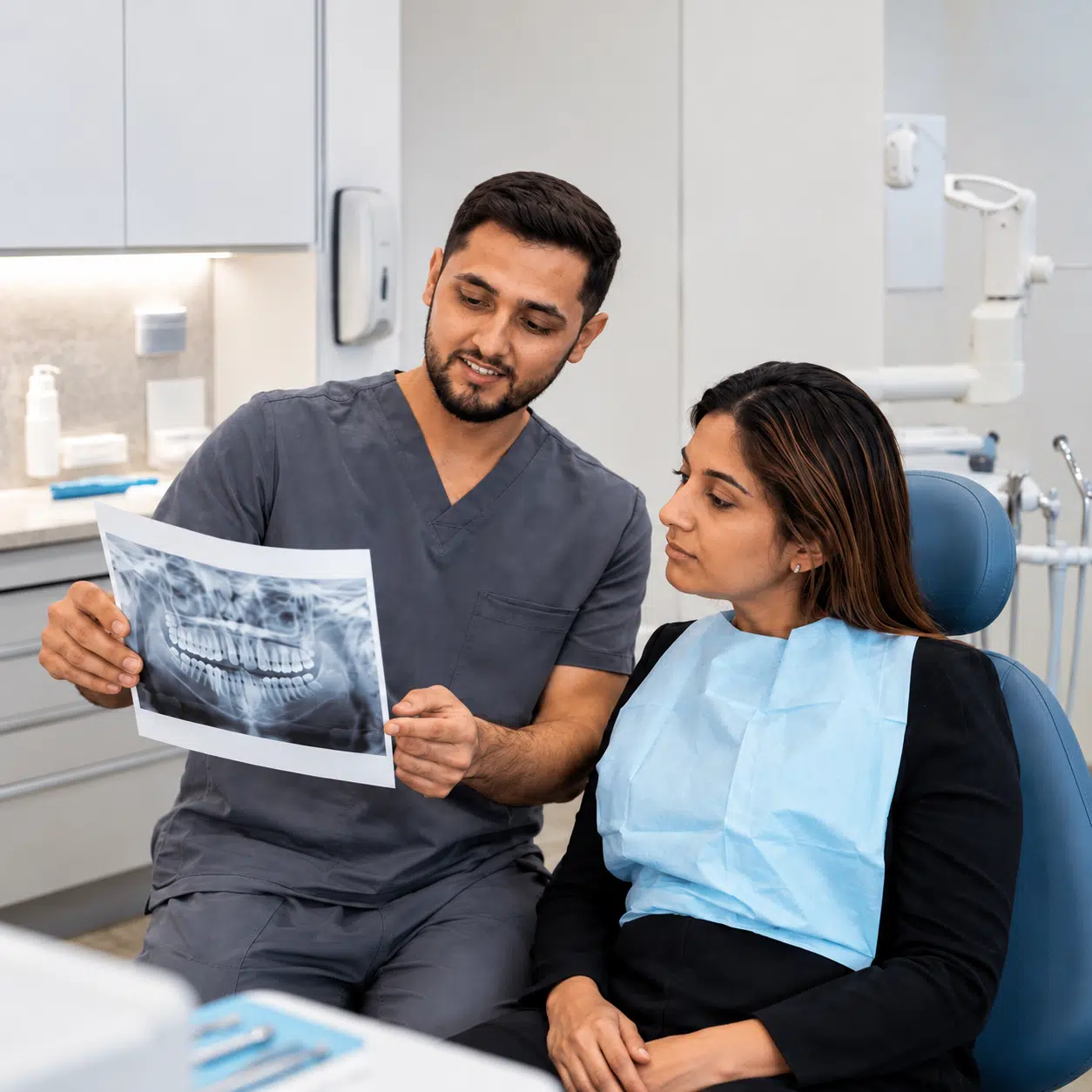
What treatments a smile makeover includes
There is no fixed list. A smile makeover is a plan built around what a particular mouth needs, which might include gum treatment, tooth movement, whitening, bonding, veneers or crowns in any combination.
For one person it is whitening and a few months of alignment. For another it is gum treatment before anything cosmetic is considered. Two people can both have a smile makeover and share almost no procedures.
That is why the planning stage carries more weight than the choice of any individual treatment.
The five steps of a smile makeover
There are five stages, and each one sets the conditions for the next.
Health. Bleeding gums, decay and failing fillings are treated first. Restorations bond to tooth structure and sit against gum tissue, so neither holds well on an unstable foundation.
Position. Moving teeth before covering them usually means less enamel needs to be removed later. The same principle applies to front teeth wearing down, where creating space comes before rebuilding.
Gum line. Where the gums sit unevenly or show more than you would like, reshaping them changes how long each tooth looks, so it is done before anything is made.
Shape. Bonding, veneers or crowns are chosen by how much tooth structure is involved and how much enamel can be kept.
Colour. Colour comes last, because whitening only changes natural teeth and not restorations.
Why whitening has to come before veneers
Whitening lightens natural tooth structure. It does not change the colour of porcelain, composite or other restorative materials, which is also why you cannot whiten crowns or veneers once they are fitted.
If veneers or crowns are fitted first and whitening follows, the restorations stay the shade they were made, while the natural teeth around them become lighter. The result is a mismatch that cannot be corrected without remaking the restorations.
Done in the right order, the natural teeth are whitened first, the shade is given time to settle, and the final restorations are then matched to the new colour. It is a scheduling detail that decides whether the finished smile looks like one set of teeth or two.
How to preview your smile makeover before treatment
Before any tooth is prepared for veneers or crowns, the proposed result can often be previewed. A common way is to design the new tooth shapes on a model of your teeth, then copy them into your mouth as a temporary mock-up made from tooth-coloured resin. It sits over your own teeth, so you can see the proposed shapes in your own face, in a mirror and in daylight. A mock-up placed this way is temporary and does not change your teeth.
This is also the most honest answer to the before and after question. Photos of other patients show what was achieved with their teeth, lips and gum lines, and none of that predicts your result. A preview on your own teeth shows the plan on your face before anything irreversible happens.
It is also a good moment to make changes. Seeing the shapes in your own smile can show that a tooth should be a little longer or an edge a little softer, which is a simple adjustment at this stage. Your dentist can tell you whether a mock-up suits your plan.
How one patient’s smile makeover was planned
Patient case
Gum care, alignment and veneers in the right order
A young adult patient came to us with several concerns at once. The gums were painful, bleeding and infected. One upper front tooth sat noticeably out of line, several other teeth were out of position, and the smile showed more gum than the patient was comfortable with. Appointments also had to be planned around long periods away.
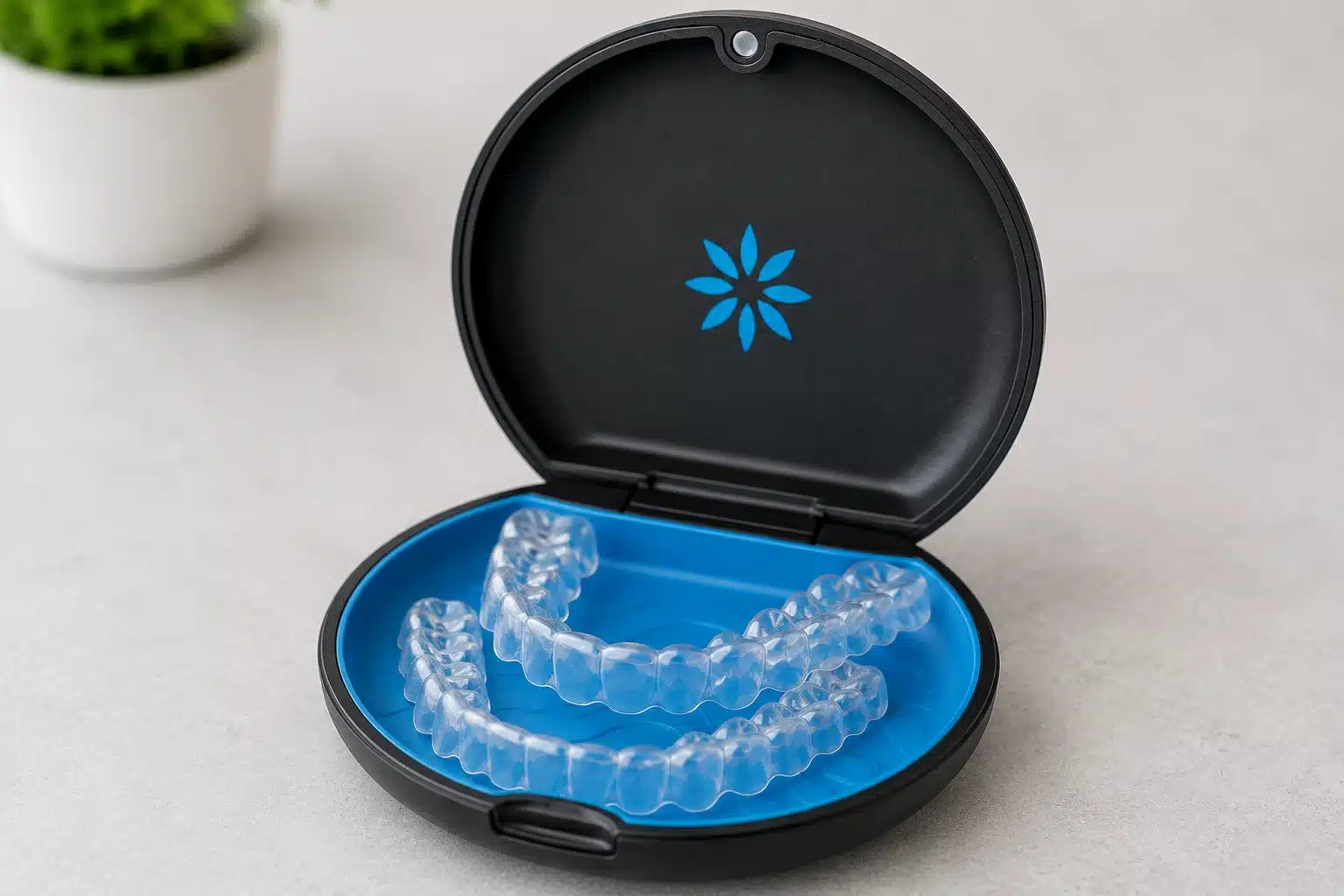
Dr Abhishek Aggarwal treated the gum infection before any cosmetic work was considered. Once the gums were healthy, a gum lift reduced how much gum showed when smiling. Clear aligners then moved the teeth into better positions. Only after that were ten porcelain veneers made for the upper teeth, and the lower teeth, which had no veneers, were whitened to match. Treatment took about fifteen months.
The gum health was resolved, and the gum line and tooth positions were corrected before any porcelain was made. The lower teeth were kept natural.
Individual results vary. This describes one patient, not an expected outcome. General information only, and not a substitute for a clinical assessment.
The order made the difference. Reversing any two of these stages would have changed the result.
How long a smile makeover takes
Most of the time is not spent on the cosmetic work.
Gum treatment takes as long as the gums need to heal, and the tissue needs time to settle afterwards. Tooth movement is usually measured in months. Whitening needs time for the shade to settle before restorations are matched. The veneers or crowns are often the shortest stage of the whole process.
Because each stage needs time, a full plan that includes gum treatment and tooth movement usually runs over months rather than weeks. At Hayat Dental, a dentist in Sydney on Broadway, we set out each stage and its timing in a written plan before treatment starts.
Frequently Asked Questions
Does a smile makeover always involve veneers?
No. A smile makeover is a plan, not a single product. For some people the work is mostly alignment and whitening, with no veneers at all.
Can I see what it will look like first?
Often, yes. A temporary mock-up placed over your own teeth can show the proposed shapes before anything is prepared. Your dentist will explain whether it suits your plan.
Is any of it reversible?
Some stages are. Whitening and alignment do not remove tooth structure. Veneers and crowns usually do, and that part cannot be undone.
Can I whiten my teeth after veneers are fitted?
Not in a way that changes the veneers. Whitening does not lighten porcelain or composite, so the restorations would stay their original shade while the natural teeth around them became lighter.
How long does a smile makeover take?
It depends on what is in the plan. Where gum treatment and tooth movement are both needed, it usually takes many months rather than weeks.



Written by the Hayat Dental team
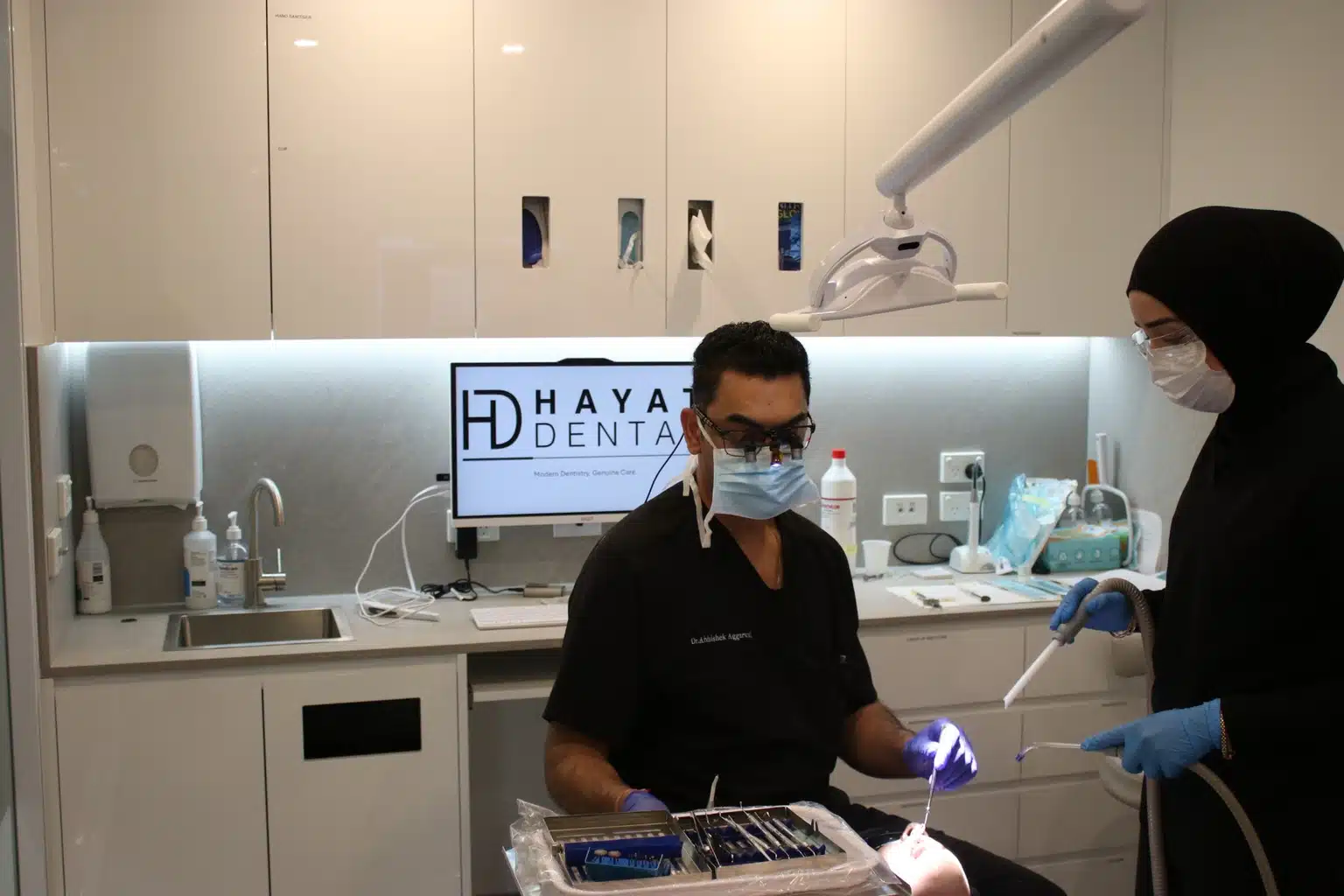
Dr Abhishek Aggarwal, Dr Joanne McGilp and Masi Hashimi care for patients at our Broadway clinic in Chippendale.
Meet the teamThis article is general information only and is not a substitute for a dental assessment. If you have pain or swelling, call the clinic.